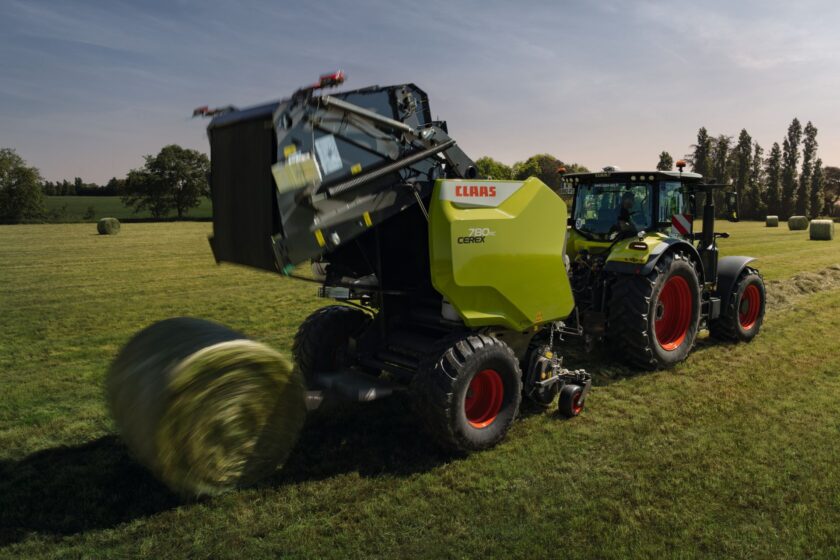
The new Claas Cerex 700 Rc round balers expand the variable-chamber lineup upwards, positioning themselves a step above the well-known “Variant 500” models.
Like the 2026 model-year versions of the latter, they benefit from the new “MultiFlow” and “MultiFlow HD” pick-ups, while featuring an exclusive bale chamber capable of achieving densities of up to 135 kilograms per cubic meter
Renewed last year in terms of technical content and operating capacity, Claas’s variable-chamber “Variant 500” round balers stand out for their ability to combine maximum baling density with a tying system that always wraps the bale firmly and securely. This is essential for optimizing transport and storage processes of the finished product, reducing unused space and limiting management costs generated by moving material between field and farm.
Maximum efficiency of the production cycle, therefore—an objective that the four balers “560 Rf/Rc,” “580 Rf/Rc,” “565 Rc Pro,” and “585 Rc Pro” aim to enhance even further through the adoption, on the 2026 models, of the new “MultiFlow” and “MultiFlow HD” pick-ups, with four and five rows of tines respectively. These units offer a working width of 2.10 meters and energy absorption 20 percent lower than traditional pick-ups.
This technical evolution was officially presented by the German group last summer during the launch of a new series of variable-chamber round balers: the “Cerex 700 Rc,” which is also equipped with the new “MultiFlow” and “MultiFlow HD” pick-ups. The new family sits at the top of the Claas offering and is built around two models, the “Cerex 760 Rc” and the “Cerex 780 Rc,” designed to meet the needs of larger mixed farms and contractors, providing an hourly productivity of around 60 high-density bales regardless of crop conditions.
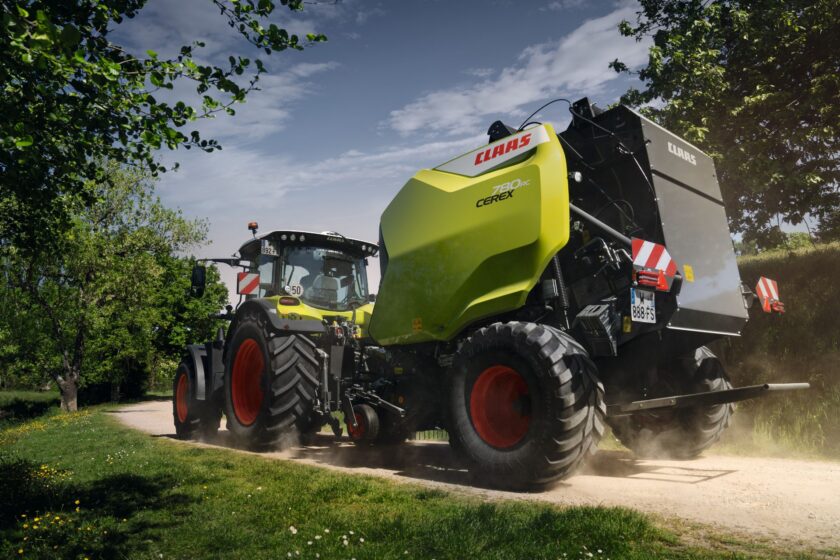
This is made possible by a bale chamber operated by two heavy-duty, endless belts, continuously cleaned and driven by a hydraulic system, achieving bale densities of around 135 kilograms per cubic meter—an absolute record in the category. A sensor mounted on each belt monitors the bale-formation process, ensuring continuous production of a structurally perfect finished product.
Bale diameters range from a minimum of 90 centimeters to a maximum of 1.60 meters for the “Cerex 760 Rc,” or up to 1.83 meters for the “Cerex 780 Rc.” All parameters can be easily monitored and managed through the 7-inch ISOBUS “Cebis 700” terminal, which also allows operators to certify the number of bales produced per customer and per cutting length, simplifying end-of-work invoicing.
Optionally, the Claas “Cerex 700 Rc” balers can be fitted with a dual-roller pre-compactor that pre-presses the incoming crop to accelerate its flow towards the “Roto Cut” rotors. These operate at 360 degrees thanks to four rows of double spiral-profile tines, 8 millimeters thick, performing up to 13,800 cuts per minute through 25 knives capable of achieving minimum cutting lengths of around 44 millimeters. Standard equipment also includes the “Pro” anti-plugging frame, which can open up to 30 millimeters and features a visual and acoustic pre-alarm system to assist in conveying crop material into the bale chamber.
No waste
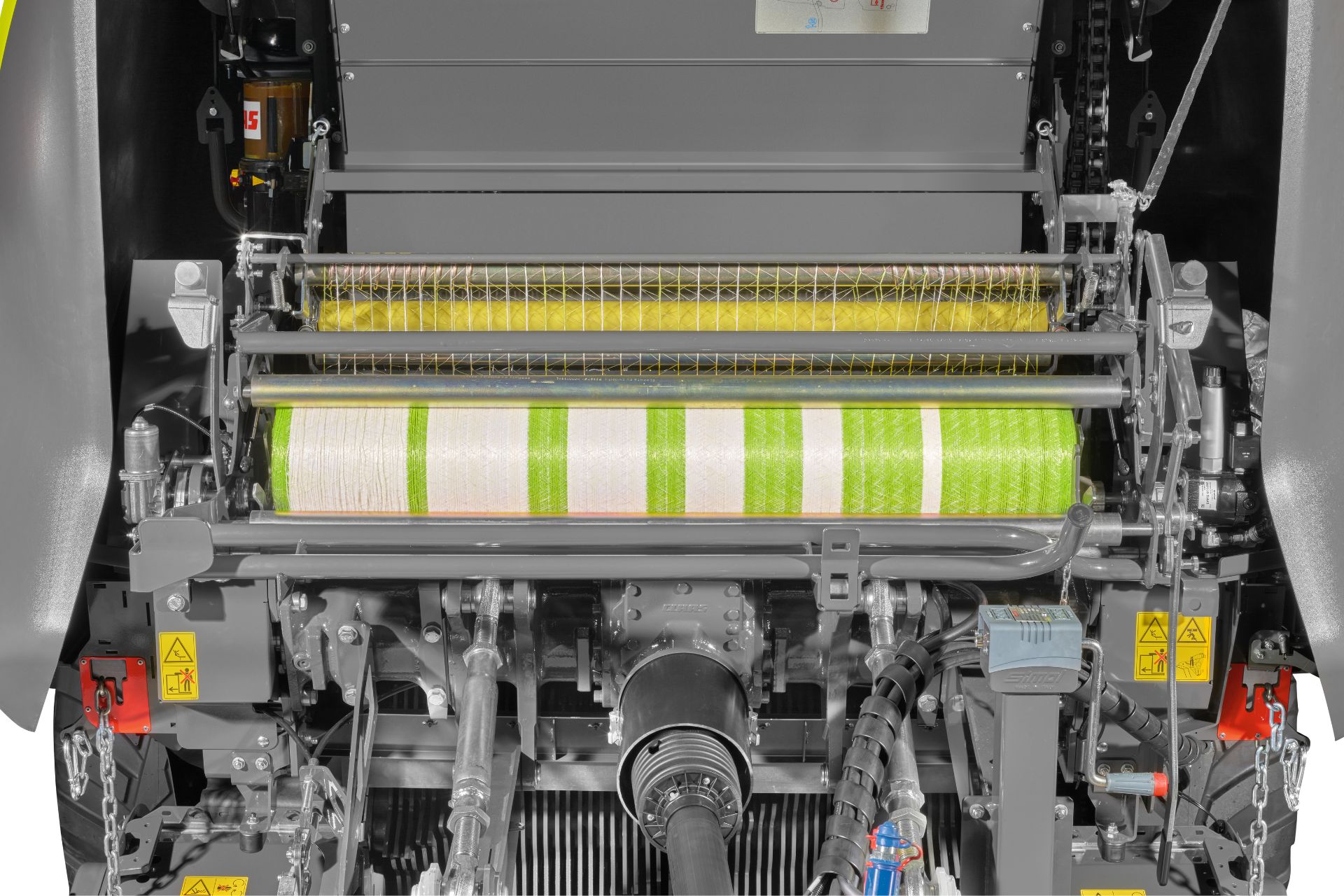
Based on the iconic and patented “duckbill” system—an evolution of the mechanism originally designed by August Claas in 1921—the tying unit of the “Cerex 700 Rc” benefits from a hydraulic net brake that ensures consistently optimal tension based on the type of bale being produced, reducing net consumption by up to 15 percent. Thanks to the ability to store net rolls both laterally and at the front, the “Cerex 700 Rc” balers can also carry up to three additional rolls, guaranteeing ample operational autonomy even during the longest and most demanding working days.
Title: Claas Cerex 700 Rc round balers: technological evolution
Translation with ChatGPT